Taharqa's Shrine: Ancient Colour Revealed
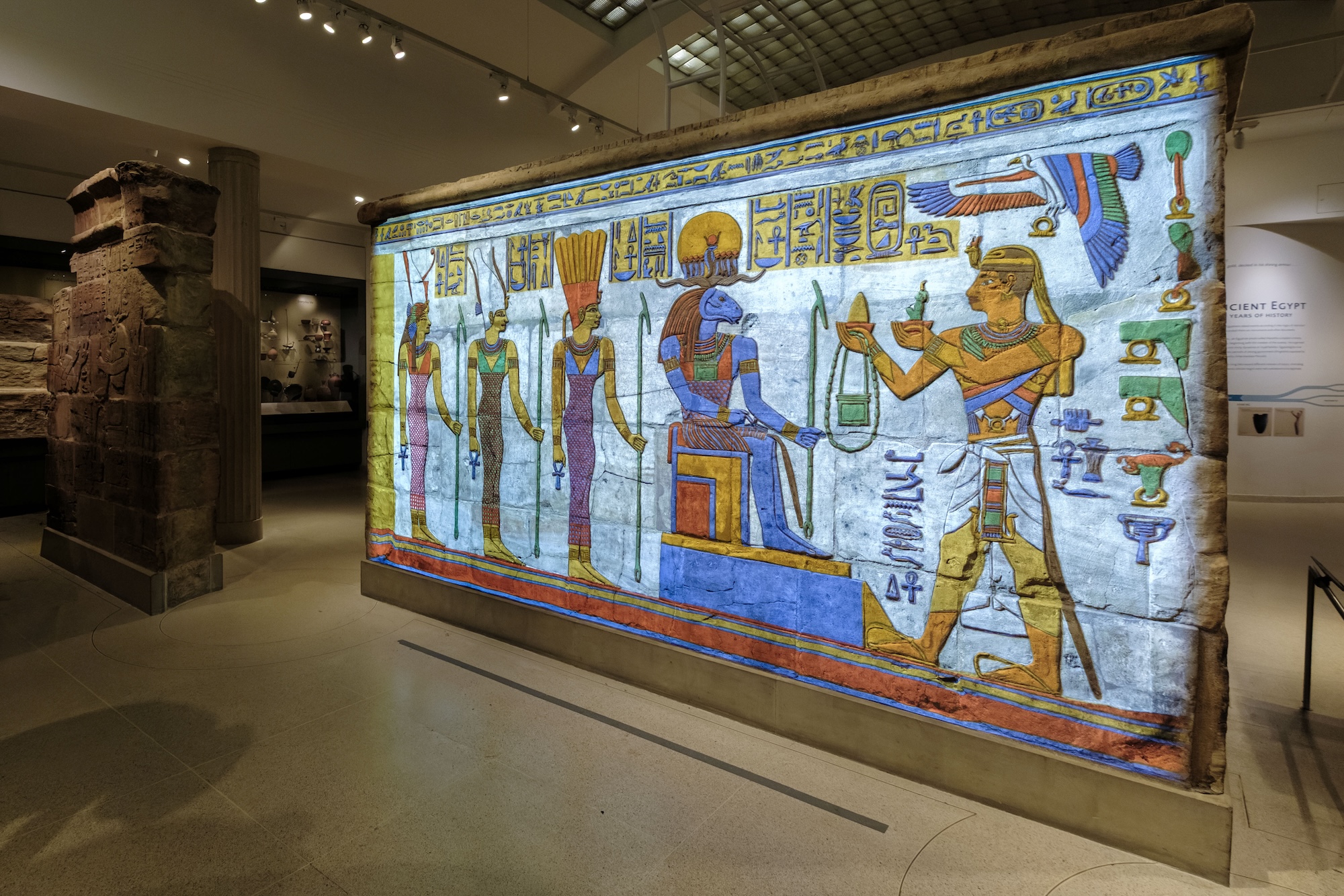
The Shrine of King Taharqa, originally sited in northern Sudan, is the only freestanding pharaonic building in Britain. Built more than 2,700 years ago, its sandstone walls are covered with extraordinary carved scenes, but almost all of their original vibrant colour has disappeared.
New archaeological and scientific research at the Ashmolean has uncovered traces of the shrine's original pigments, revealing a remarkably colourful past. Building on the success of an earlier collaboration using projection mapping on a smaller artefact, Clay worked closely with the museum's curatorial and interpretation teams to design and produce a more ambitious experience directly on the ancient monument.
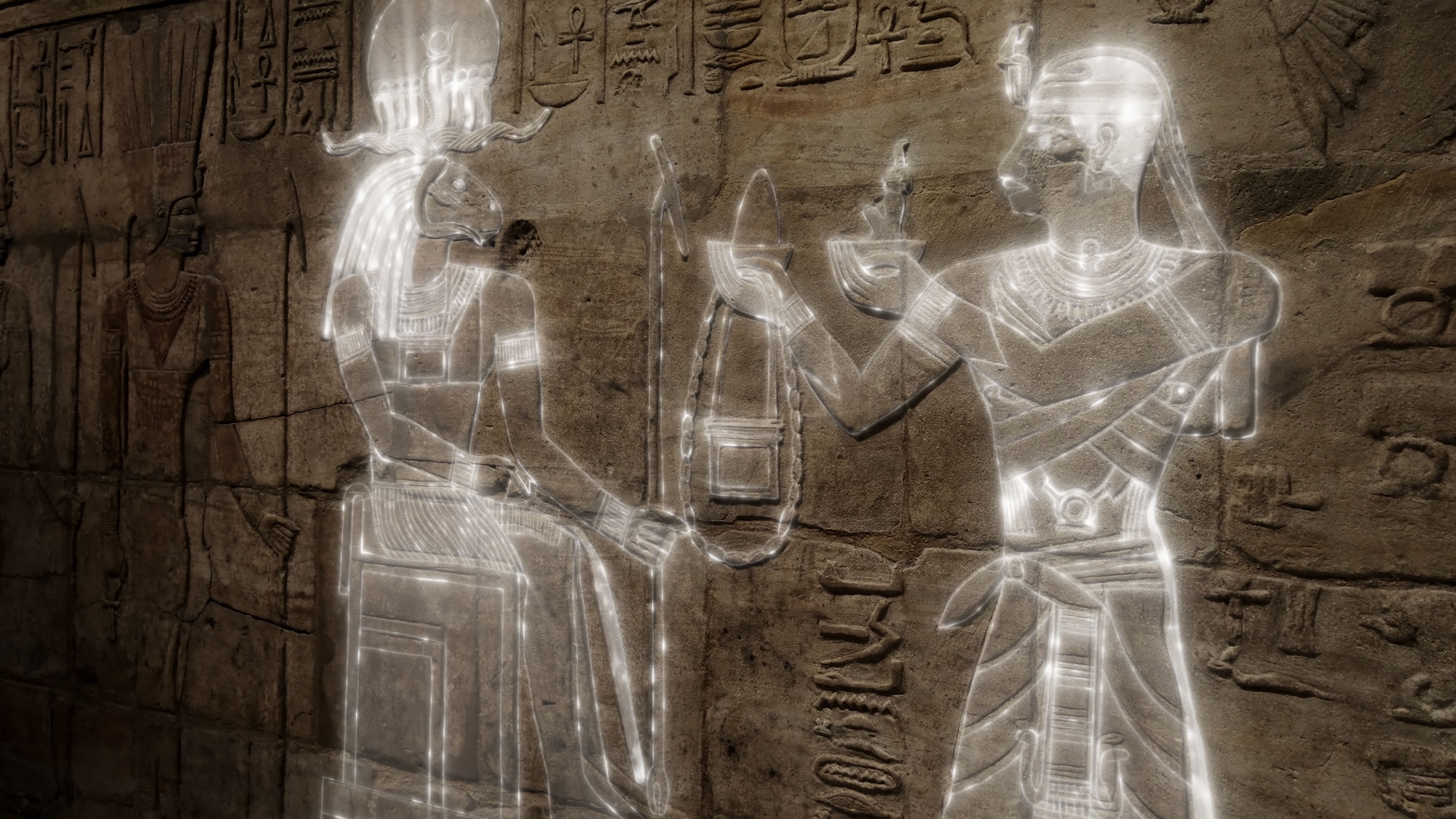
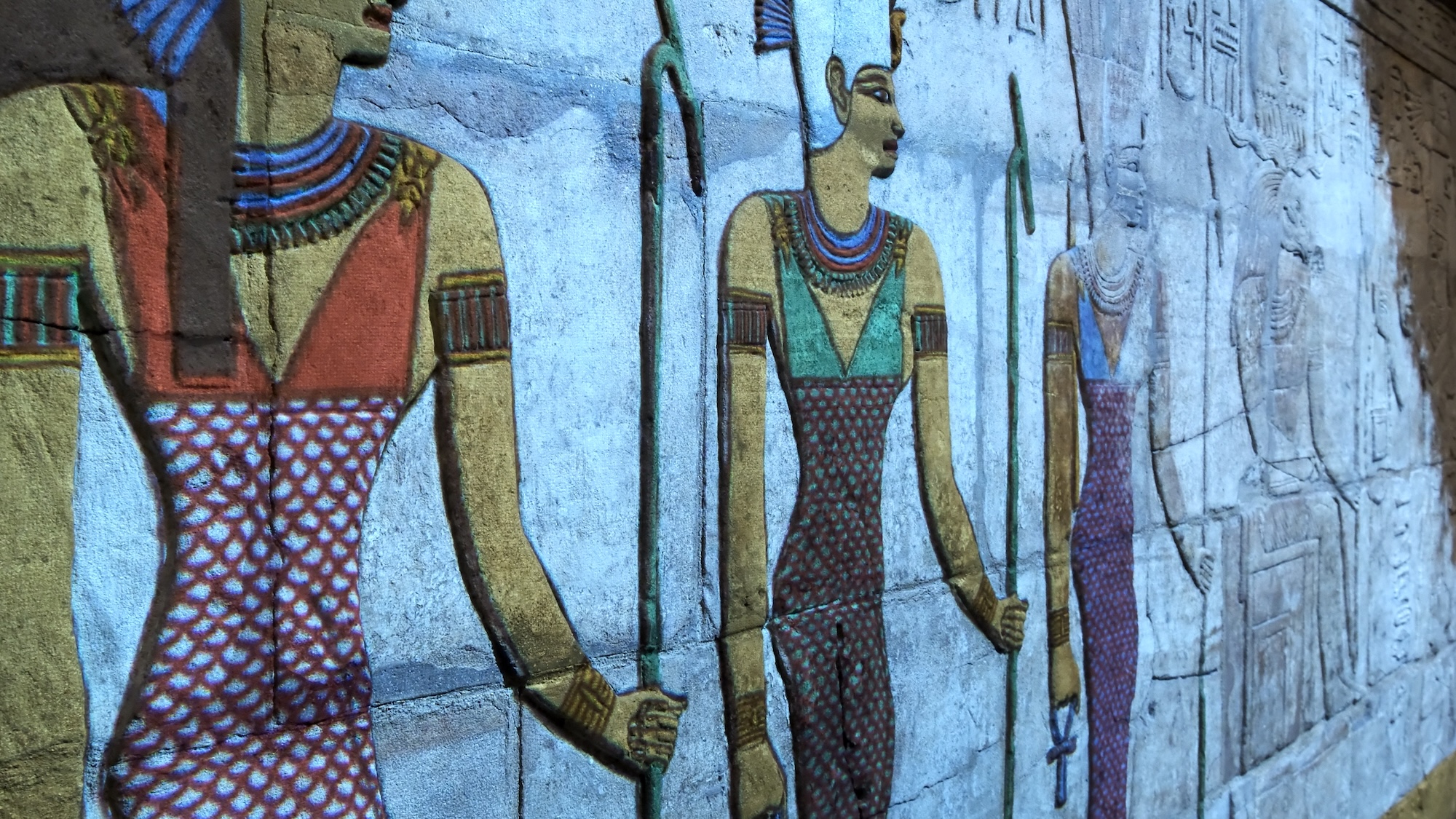
Two visitor-activated animated films illuminate the shrine's west wall. The first explores its history and lost colours, gradually transforming the weathered sandstone into a vivid reconstruction of its original painted decoration. The second reveals the meaning of its intricate carvings, highlighting figures, hieroglyphs and offerings through carefully choreographed animation. In one memorable sequence, a carved vulture takes flight, bringing an unexpected moment of movement and excitement to the ancient imagery.
To achieve the effect, Clay used photogrammetry to create an accurate 3D model from the museum's photography of the shrine. Guided by detailed visual instructions from the Ashmolean's curators, Clay used this model to digitally recreate and animate the painted decoration. The model itself was then removed from the final imagery, leaving only colour and animation to be projected onto the original stonework. Careful on-site testing and calibration ensured precise alignment with the carvings, with colours and lighting optimised for the gallery environment.
The result balances detailed historical interpretation with moments of immersion and spectacle, revealing the shrine in an entirely new light. Unlike a physical restoration, the projection leaves the original stonework untouched, while the digital reconstruction can be updated as new research reshapes our understanding of its appearance. The installation demonstrates how technology can transform museum interpretation while keeping the authentic object at the heart of the experience.